Whether you are cruising down Woodward Avenue in Detroit, navigating the snowy roads of the Upper Peninsula, or shopping for a used car in Grand Rapids, you might find yourself needing to learn more about a specific vehicle. Perhaps a car has been abandoned on your property, or maybe you are about to hand over thousands of dollars to a private seller and want to ensure the vehicle is legitimate. The natural question that arises is: Can you look up a Michigan license plate number to find out who owns the car or what its history entails?
The short answer is yes, you can look up a plate, but the type of information you are legally allowed to access depends heavily on who you are and why you are searching. Conducting a proper Michigan License Plate Lookup is an incredibly powerful tool for used car buyers and investigators alike, provided it is done within the boundaries of state and federal law. In this guide, we will explore exactly what details are public, what remains private, and how you can safely investigate a vehicle in the Great Lakes State.
The Driver’s Privacy Protection Act (DPPA) in Michigan
To understand what you can and cannot access, we first have to talk about privacy laws. Decades ago, it was relatively easy for a private citizen to take a license plate number to the local Michigan Secretary of State (SOS) office and, for a small fee, walk out with the registered owner’s full name and home address. However, this open-door policy led to significant safety concerns across the country, including stalking and harassment.
To combat this, the federal government enacted the Driver’s Privacy Protection Act (DPPA) in 1994. The State of Michigan strictly adheres to the DPPA, which federally mandates that all state motor vehicle departments protect the personal, identifying information of drivers and vehicle owners.
Under these regulations, the Michigan SOS is legally prohibited from releasing Personally Identifiable Information (PII) to the general public. PII includes:
- The registered owner’s first and last name
- Home or mailing addresses
- Telephone numbers
- Social Security Numbers
- Driver’s license numbers
- Medical or physical disability information
Therefore, if you are an average citizen hoping to run a plate to find out where someone lives because they cut you off in traffic, you are out of luck. In fact, attempting to obtain this protected information under false pretenses is a violation of federal law and can result in severe fines and criminal penalties. Any online service that guarantees to provide you with the personal details of a driver for a few dollars is likely operating illegally or relying on severely outdated, unverified third-party data.
Permissible Uses: Who Can Access Personal Information?
While the general public is blocked from accessing names and addresses, the DPPA is not an absolute blackout. The law outlines several specific exemptions, known as “permissible uses,” which allow certain authorized individuals and agencies to access unredacted motor vehicle records from the Michigan SOS.
You may legally access the registered owner’s personal information if you fall into one of the following categories:
- Law Enforcement and Government Agencies: Police officers, courts, and other government entities can freely run plates to investigate crimes, issue citations, or carry out their official governmental functions.
- Insurance Companies: Auto insurers are granted access to verify claims, investigate potential fraud, and appropriately rate insurance policies. If you are involved in a collision, your insurance adjuster will use the other driver’s plate to find their insurance details.
- Towing and Impound Businesses: If a vehicle is illegally parked on private property or abandoned on the side of a Michigan highway, towing companies can look up the owner to send legally required notices regarding the impoundment and pending auctions.
- Private Investigators and Security Professionals: Licensed PIs acting within the scope of their official duties may access this data, provided their investigation meets strict DPPA compliance criteria.
- Legal Proceedings: If you are actively involved in a civil, criminal, or administrative legal case, an attorney can subpoena vehicle records to serve legal documents or investigate claims.
What Information CAN You Access? (The Vehicle History)
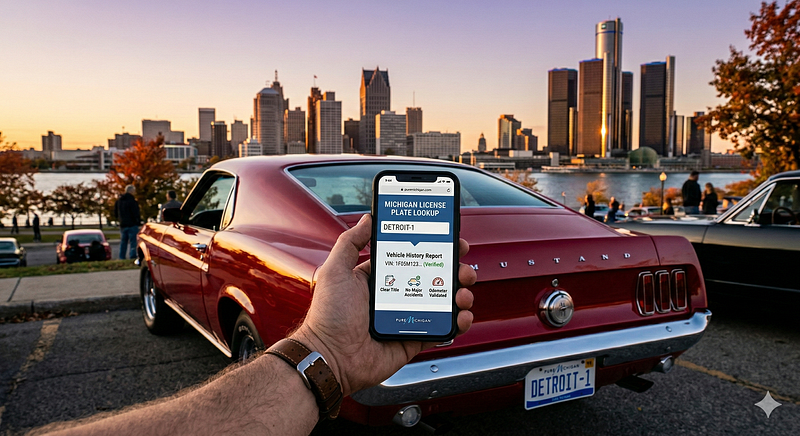
If you do not have a permissible use under the DPPA, you might think running a plate is pointless. Fortunately, that is completely false. While the owner’s identity is protected, the vehicle’s identity and history are a matter of public record. For anyone buying a used car in Michigan, this data is worth its weight in gold.
By performing a standard background check on a vehicle’s license plate, you can uncover a massive dossier of mechanical and administrative data, including:
- Vehicle Identification Number (VIN): The lookup will generally convert the plate number into the car’s unique 17-digit VIN.
- Vehicle Specifications: You can verify the exact year, make, model, trim package, engine specifications, and manufacturing location to ensure the seller isn’t misrepresenting the car.
- Title History and Brands: This is arguably the most critical piece of information. A comprehensive search will reveal if the Michigan SOS (or any other state’s DMV) has issued a branded title. This alerts you if the car has been previously declared a total loss, salvaged, rebuilt, or flood-damaged — a major concern given Michigan’s harsh winters, heavy road salt usage, and occasional flooding.
- Accident and Damage Reports: You can view historical data regarding reported accidents, airbag deployments, or severe structural damage that might not be visible to the naked eye.
- Odometer Verification: The report will show historical mileage readings logged during sales, emissions tests, or maintenance visits, helping you spot illegal odometer rollbacks.
- Lien and Theft Records: You can determine if there is an outstanding loan on the vehicle that needs to be cleared before the title can be transferred, or worse, if the vehicle has been reported stolen.
How to Perform a Michigan License Plate Lookup
Michigan is a “rear-plate-only” state, meaning you only need to catch the alphanumeric sequence on the back bumper of the vehicle. Gathering the vehicle’s history is a simple, straightforward process that you can do from your smartphone or computer.
Step 1: Record the Plate Number Correctly Take note of the exact numbers and letters on the Michigan plate. Pay attention to whether it is a standard “Pure Michigan” plate, a spectacular peninsulas plate, or a specialized university or cause-related plate, though the core alphanumeric string is what you need for the search.
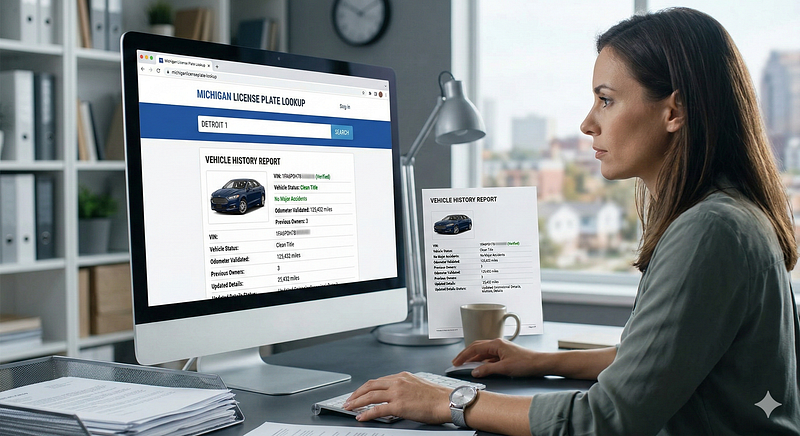
Step 2: Utilize a Trusted Online Database Rather than relying on a basic search engine query, you should use a specialized automotive data tool that legally aggregates public records, insurance databases, and the National Motor Vehicle Title Information System (NMVTIS). For a streamlined, secure, and DPPA-compliant search, you can perform your lookup at https://milicenseplate.com/. Simply enter the license plate number into the search bar, and the system will cross-reference millions of records to decode the vehicle.
Step 3: Analyze the Results Before you sign a bill of sale or hand over a cashier’s check, carefully read through the generated report. Look for discrepancies between what the seller is telling you and what the official records show. If a seller claims a car has a “clean history” but the report shows three previous accidents, you know it is time to walk away.
Conclusion
In conclusion, while the intrigue of finding out exactly who is behind the wheel of a specific car is understandable, Michigan and federal privacy laws make doing so nearly impossible for the average citizen. The DPPA serves as a necessary shield to protect our personal information from those who might misuse it.
However, the inability to find a name and address should not deter you from investigating a vehicle itself. Whether you are trying to avoid buying a rusted-out lemon, verifying the trim level of a classic Detroit muscle car, or checking for hidden liens, running a plate is an essential step in the car-buying process. By using a legitimate online lookup tool, you can legally access the comprehensive vehicle history you need to make an informed, confident, and safe decision.